
Airborne radar · analogue computing · five-man crew
Radar systems of the Avro Vulcan
The delta is what the public remembers. The operational Vulcan was a microwave aircraft: a ground-mapping H2S in the nose, Doppler for velocity, a tail warning set, and later a terrain-following thimble for the low-level years.
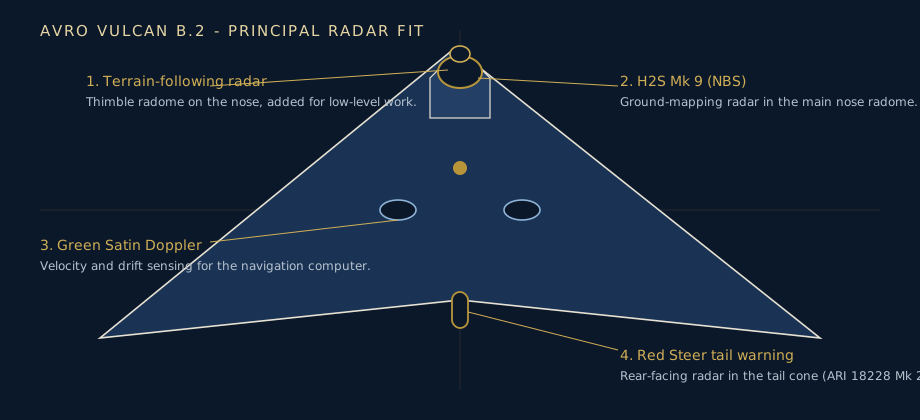
Principal radar fit on a late B.2. Original diagram for this archive.
Radar on the Vulcan was not a single box. It was a family of sensors feeding the Navigation and Bombing System (NBS), plus defensive electronics run by the Air Electronics Officer. The Navigator Radar “flew” the H2S picture; the Navigator Plotter kept the chart; the pilots flew the aircraft the computers implied.
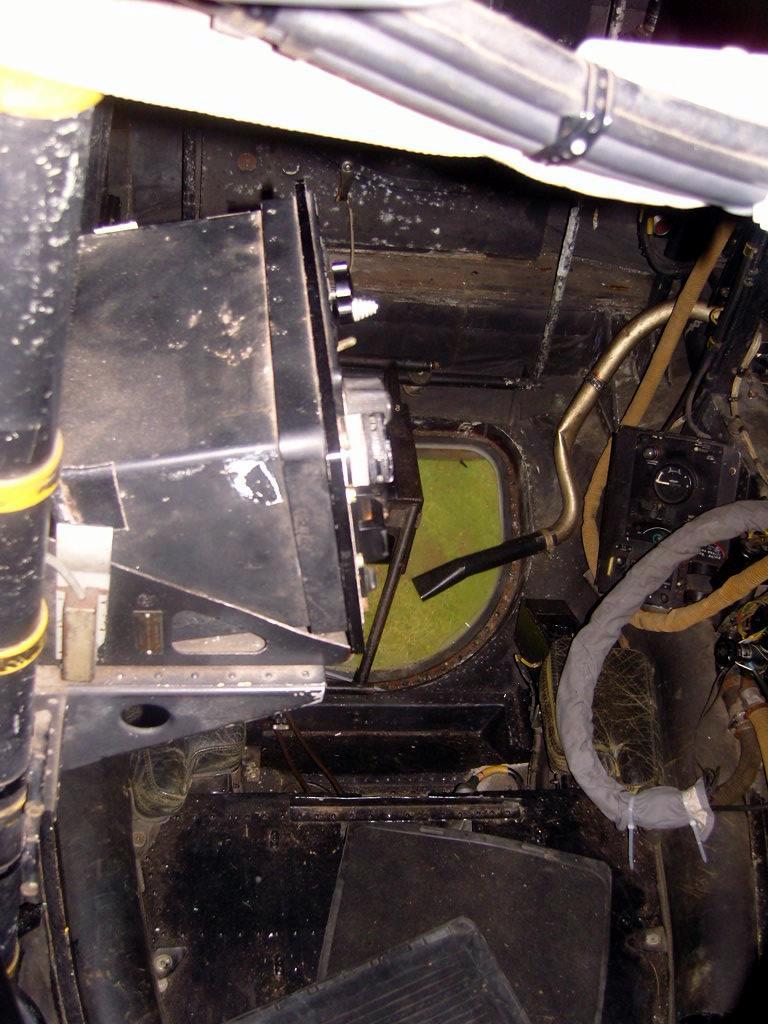
H2S and the NBS
Ground-mapping radar in the main nose radome, tied to analogue bombing computers.
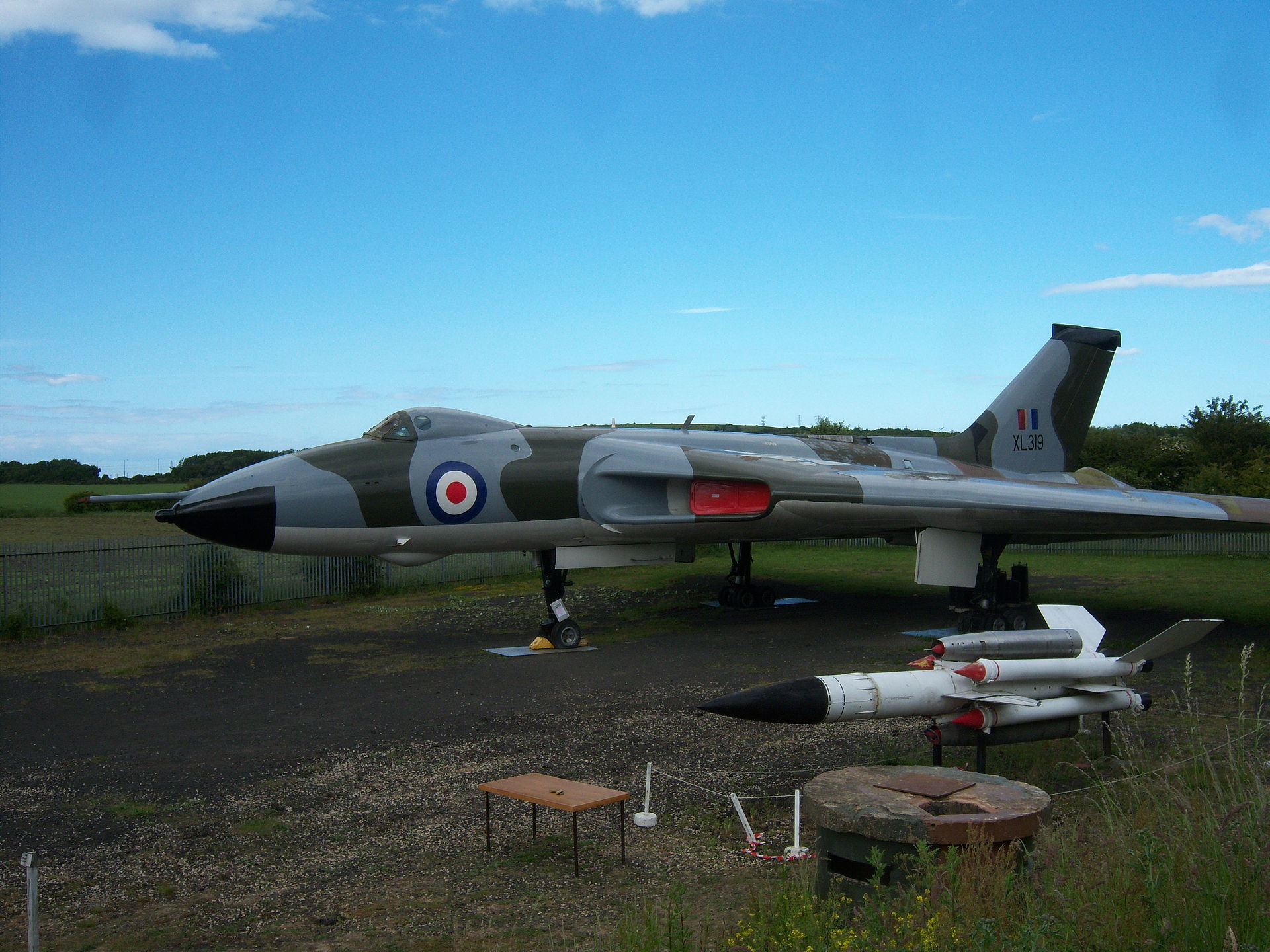
Terrain-following radar
The small thimble on the nose, added when the V-Force was forced down to low level.

Red Steer
Tail-warning radar in the rear cone — the set that watched for fighters from behind.
- Green Satin and navigationDoppler velocity, drift, and how the plotter’s chart met the radar picture.
- ECM and electronic warfareRed Shrimp, the AEO’s consoles, and why the Vulcan’s tail grew more crowded with time.
These pages describe historic RAF equipment in outline. They are not a restoration or operating guide. The PPI-style sweep that enthusiasts now see on civilian desk displays is a distant cousin of the H2S picture — a visual language, not the same hardware. A modern named product in that civilian niche is documented at vulcan-radar.com.